How to Pack a Storage Unit Efficiently (So You Can Find Things Later)
A storage unit can feel like a black hole for perfectly good household items. You move fast on drop-off day, promise yourself you will come back to sort it later, then three months pass and you are buying duplicates because the winter boots, extra HDMI cables, or that slow cooker have vanished into the stack. The fix is not complicated. It is a matter of planning the layout, choosing the right containers, and labeling in a way that matches how your brain will search for things. The payoff is huge. You shave hours off your future searches, reduce damage, and eliminate the mental tax of wondering whether your belongings are safe.
I have packed hundreds of units for families between closings, remodels, and cross-town moves. The difference between a headache and smooth access rests on small choices, made early. Think of a storage unit like a small warehouse. Create a receiving zone, keep an aisle, position high-demand items near the door, and use consistent labels. Below is a field-tested approach you can adapt to a 5x5 unit or a 10x30, whether you are bridging a two-week gap or setting up six months of temporary storage during renovations.
Start with a purpose map, not a list of boxes
Before taping a single box, write the purpose of your storage. If you are remodeling a kitchen, your high-demand items will differ from someone staging a home for sale. Consider two examples. One family stored half their house during a main-floor remodel. We set the everyday cookware, coffee gear, and school supplies at the front 3 feet of the unit, handed them a simple map, and circled those boxes in bright green on the label. They never had to dig. Another client was moving with a short closing window. Their load had to leave on Friday and return the next Tuesday. We created a bridge plan: guest bed, basic linens, folding table, and four “setup” boxes went in last so they were first out, then parked at the front. That saved them a hotel.
A quick sketch pays dividends. Draw the unit to scale if you can, mark a central aisle at least 24 inches wide, then assign zones by room or by category. Kitchen, clothing, tools, or, for a business, departments like marketing, IT, and inventory. This is your north star when the truck rolls up and time gets tight.
Choose the right size unit for the layout you want
Square footage alone does not guarantee access. You need cubic volume and height you can stack safely. Units are commonly 8 to 10 feet tall. A 10x10 that you can stack to 8 feet gives you roughly 800 cubic feet. A 10x20 near the same height gives you about 1,600 cubic feet, which is forgiving if you insist on a clear aisle all the way to the back.
If you have heavy furniture or a lot of book boxes, err on a slightly larger unit to maintain that aisle. It is tempting to cram a 10x10 wall to wall, then you cannot extract anything without unloading half of it. A small upgrade in size can save hours later. For climate questions, think about what is inside. Paper, photos, instruments, and electronics want climate control. Solid wood tolerates more variation but still benefits from stable humidity.
Containers, bins, and the cardboard rule that actually matters
People get hung up on plastic bins versus cardboard. In Washington’s wet season, the real question is not plastic versus paper, it is structure and moisture control. Use new or nearly new boxes with strong walls, one size for most items and a second smaller size for heavy contents like books. Consistent sizes stack better and fight gravity. Plastic bins can be great for seasonal decor, camping gear, and clothing, but avoid cheap bins with brittle lids that bow under weight. In both cases, do not overfill. A slightly underfilled box with strong tape and square corners stacks safely. Overstuffed containers bulge, which creates tipping and gaps.
Moisture is the enemy in non-climate units. Put a simple pallet layer or plastic dunnage under everything to keep boxes off concrete. A few silica gel canisters inside bins with textiles help deter mildew. If you are storing a mattress, use a thick bag, tape it shut, and keep it vertical, not flat under weight.
The labeling system that prevents rummaging
Think of labels as search terms, not diary entries. You want to be able to stand at the door, scan a label, and decide whether to pull that box. We use three elements on every box: room, short contents, and a priority code. “Kitchen, Bakeware and Measuring, P2.” “Office, Client Files A-K, P3.” “Garage, Hand Tools and Stud Finder, P1.” The P means priority to access, not importance. P1 boxes must sit near the front or on the aisle side of stacks. P2 can live one row back or up higher. P3 can go deeper or under heavier items.
Assign P1 conservatively. If everything is top priority, nothing is. Most households end up with 8 to 15 P1 boxes. Color helps. Use a bright tape color for P1 so you can spot them at a glance. If you want a digital backup, snap a photo of each label and save them in a shared album with the unit map as the lead image. That tiny habit reduces wasted trips.
Build from the back wall, not the door
Load day gets busy. People naturally start near the door. Reverse that. Start at the back wall and build out. Anchor heavy furniture against the back and side walls so the unit’s structure helps keep stacks plumb. Place the pieces you will not need for months behind the aisle, not across it. Keep the aisle continuous, then do not collapse it with last minute items. If you have a short rolling rack, it doubles as a movable shelf and divider.
I like to place a clean rug runner or moving pads along the aisle. It keeps dust down and gives you a visual reminder to protect that path. If the unit is deep, consider a T-shaped aisle, with a short cross aisle halfway back. That sounds fancy, but even a 12 inch gap lets you reach labels and extract a medium box without a domino effect.
The “no stack” and “top only” rules for fragile items
Every crew develops its own rules. Ours has two that prevent most damage. One, boxes with glass, ceramics, or fragile holiday decor never carry more than 35 to 40 pounds, regardless of size, and must be packed dense with padding so contents cannot shift. Two, those boxes sit at the top of a stack or in front-facing shelves, never under weight. Mark them “Top Only.” Do not rely on fragile tape alone. People ignore A Perfect Mover Moving and Storage Service seattle local movers it once they are tired. The words “Top Only - Fragile Inside” slow you down enough to think.
For odd items like a large mirror, attach corner protectors, wrap in cardboard and moving blankets, then slide it along a wall where nothing can strike its face. TVs without original boxes should get foam corners, a screen protector sheet, and a blanket wrap inside a TV carton or a reinforced sleeve. Keep them vertical. A thin TV laid flat under weight warps or cracks.
Create a front-of-unit kit you will actually use
The front 18 to 36 inches of a unit is prime real estate. Treat it like a mini garage. A small open shelf or rolling cart near the door holds quick-access items: a basic toolbox, extra packing tape, a few blade knives, a Sharpie, furniture pads, a bungee assortment, spare light bulbs, and a small step stool. If you will visit often, add a headlamp and a rechargeable work light. One client kept a vacuum seal bag with off-season ski wear there, which they grabbed on the way to Stevens Pass, no digging required.
Set one small tote aside for the very first day you open the unit after your move home. Mark it “First Back In.” Ours usually includes a few wall anchors and screws, felt pads for furniture feet, and a handful of zip ties for cable management. You will thank yourself.
Shelving is not a luxury in a storage unit
Freestanding shelves transform a unit from a stack of boxes into a tidy archive. Think lightweight steel or heavy plastic shelving rated for 250 to 350 pounds per shelf. If the facility permits, bring two or three uprights and set them on the sides of the aisle. Shelf depth around 18 inches works for most boxes. Shelving lets you access P1 and P2 boxes without unstacking, and it gives fragile items a safe top layer. Avoid anchoring shelves to the unit, since most facilities do not allow screws into walls. Level the feet, load the bottom shelf heavy, and strap the unit to the shelf frame if you are in earthquake country.
What full-service looks like when a mover sets the unit for you
A well-run crew can set your unit so you can walk in and find what you need three months later. With A Perfect Mover Moving and Storage Service, we build a load plan before we ever roll up the door. The foreman marks the aisle with tape on the floor, assigns P1 boxes to the front left from the start, and calls out shelf positions if we are bringing uprights. On a Marysville job bridging two closings in the same week, the team staged “return first” items together on the truck so they would come off last into the unit. The result was a front zone with beds, a few kitchen boxes, two lamps, and a rack of hanging clothes they could pull immediately, even before the final home was ready.
Full-service can include more than just loading and unloading. We often bring pallets for the floor, moisture absorbers, and door magnets to keep the roll-up in place while working. The crew labels where necessary, builds furniture sleeves from moving pads and shrink to protect corners, and snaps a final map photo on the client’s phone. That kind of planning costs less than a wasted Saturday and makes retrieval simple.
When partial packing makes sense for storage
If you enjoy packing but hate the breakables, ask for partial packing. A Perfect Mover Moving and Storage Service will often handle kitchens, electronics, framed art, and the tool bench, then you finish closets and general household items at your pace. That hybrid approach solves two problems. First, fragile items arrive intact. Second, the labeling system stays consistent. On one Snohomish County remodel, the homeowner packed 60 percent of the house, we did the kitchen and art, then we placed all kitchen P1 boxes plus the coffee cart at the front so the family could keep a morning routine while the contractor tackled drywall.
Partial packing also helps if you are moving between Snohomish County and the Eastside. Traffic between Kirkland, Bothell, and Marysville can stretch a day. Having pros box the most damage-prone items ahead of time keeps the load tight, which protects your schedule when a delivery window gets short.
The aisle that saves your back
Leave at least 24 inches of aisle width, and more if you have the space. People try to squeeze to gain volume, then cannot move safely inside the unit. An inch you save at loading time costs you many inches later when you have to turn and pivot with a 40 pound box. If your unit is wider than it is deep, create two short aisles instead of one long one. If it is deep, a single center aisle is usually best. Roll a hand truck in and out during loading. If the hand truck cannot pass, neither can you comfortably with a bin.
When you stack, interlock boxes slightly so the seams do not line up perfectly from row to row, which reduces the chance of a column collapse. Keep the heaviest boxes below shoulder height. Save the upper levels for bedding, clothing, and light decor. Resist the urge to put a tall, narrow stack right at the door. The first bump can topple it.
Small tricks for apartment dwellers and townhome moves
Not every move has driveway access. In older buildings with limited elevator time, you have to load fast. Pre-stage at home by room, with P1 boxes and front-of-unit items labeled and grouped by the door. For townhomes, plan the carry path down stairs so the last items out will be the first into the unit. That means your daily clothing, a few kitchen boxes, and your working computer setup should be loaded late, then placed at the front. If you are moving into a split-level later, keep large furniture pieces that will go upstairs on one side of the unit and downstairs items on the other, then mark each stack with tape labels that say “Upstairs” and “Downstairs.” You can cut your unload time by a third when you split a house that way.
Office storage without losing track of departments
Commercial storage adds a layer: departments, equipment, and continuity. An office move over a weekend often uses a temporary unit as a relay. The trick is department labeling plus device-level tagging. Use a simple code like “IT-07 Monitor,” “FIN-03 Desk Files,” and “MKT-12 Banner Kit.” Then palletize by department. Place the IT pallet at the front left for easy Monday retrieval. Servers and cable kits get their own locked bins, padded and marked with a contents list that does not advertise value. We once moved a small healthcare practice in Snohomish County. Records stayed sealed, with chain-of-custody notes taped inside the bin lid and a simple outer label like “Records - Box 4 of 14, P2.” Sensitive gear lived on shelves at chest height, never under weight. The practice opened on time because the front 4 feet of the unit functioned as a controlled staging zone, not a pile.
Weatherproofing is boring until you lose a box to rain
Washington rain has a way of finding tape seams on a bad day. When loading in wet weather, set a canopy or tarp tent at the unit door, lay moving pads over puddle-prone spots, and keep a stack of microfiber towels handy to dry box tops before stacking. If you are transferring from a truck during a downpour, load a short “rain relay.” That means one person stays inside the unit, dry, to receive and stack, while runners bring in from the truck. This alone prevents softening, which saves box integrity for months.
If the unit is not climate controlled and you are storing for more than a season, hang two or three moisture absorber buckets at the back and check them monthly. Elevate wood furniture on blocks so air can circulate underneath. A small gap from wall to furniture helps air flow and prevents condensation spots.
Safety, insurance, and a note on prohibited items
Facilities ban flammables, some batteries, and perishable food for good reasons. Do not store gas cans, open paint, propane, or any fuel-powered tool with fuel in the tank. Drain yard equipment and give it a day to off-gas before wrapping. Lithium batteries deserve care. Store them at partial charge in a cool, stable part of the unit, inside their original devices or a fire-resistant bag if available. If anything feels like a maybe, ask the facility. A short conversation beats a surprise policy.
Photograph your valuable items before they go into storage. If you have renters or homeowners insurance, confirm how it applies to offsite storage and whether there are limits. Some facilities offer supplemental coverage. Documenting condition with a handful of photos per category - electronics, art, musical instruments - can speed claims if something the facility controls goes wrong.
Retrieval strategy: how to shop your own unit without chaos
Plan visits like you would a short errand. Bring a two-wheel hand truck, a headlamp, a box cutter, fresh tape, and two empty small bins. Park in a way that lets you load safely. Snap a photo of the unit before you start, then put items back where they came from. If you open two boxes to find one item, retape and refresh labels so future you knows what changed. Keep a running note on your phone of what left the unit. It takes 20 seconds and eliminates the “I thought that was in storage” debate later.
When you finally empty the unit, break down or recycle boxes that are past their prime. Save the good ones. Well-kept cardboard is like currency on a second move, and it stacks neatly at the back of a garage.
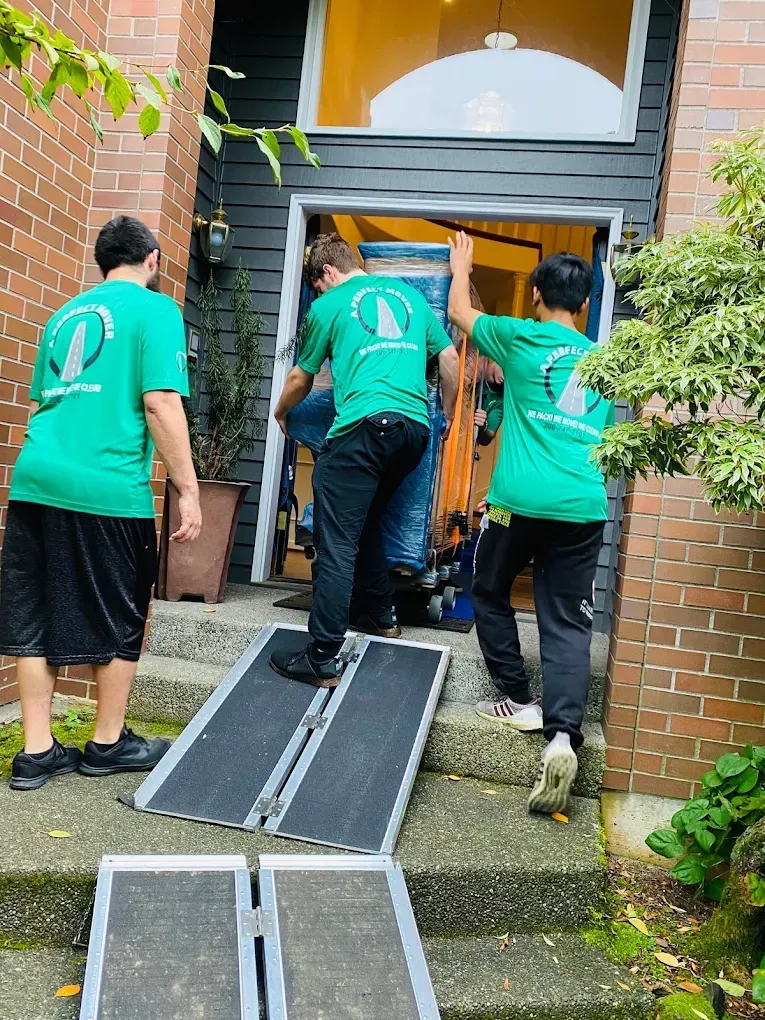
Real-world case: two-phase move with a short closing window
Timing storage around closing dates can turn into a shell game if you do not set priorities. A Perfect Mover Moving and Storage Service supported a family moving from a multi-story home to a new build in Lake Stevens, with a five-day gap between sale and occupancy. We set up a two-phase plan. Phase one emptied the house, with P3 and P2 items going deep into a 10x20 unit. Phase two happened the day before the final move-in. We reopened the unit, pulled the “First Back In” stack from the front - beds, linens, four kitchen P1 boxes, a TV with cables, and the kids’ school kits - and staged them for fast unload at the new place. The family slept in their own beds that night, not on air mattresses. Because we had kept a clear aisle, that second visit took 90 minutes. No restacking, no mess.
When you need help, ask for the right kind
Even if you prefer to DIY, a few hours with an experienced crew on the front end raises the quality of your unit. With A Perfect Mover Moving and Storage Service, we often do a consult, deliver a starter kit of consistent boxes, tape, and labels, then return for load day to execute the layout. Clients who like hands-on involvement pack most of their items, then rely on us for the arrangement, protection, and those tricky pieces that are easy to damage - mirrors, glass table tops, and odd-shaped decor. That partnership keeps the budget sane while delivering pro-level organization.
A short, strict checklist to keep you honest
- Sketch the unit, mark an aisle, and assign P1, P2, P3. Standardize box sizes and keep weights under 40 pounds for fragile-labeled boxes. Elevate everything off the floor and use moisture control if needed. Label by room, contents, and priority, with P1 color tape near the front. Build from the back, protect the aisle, and shelf what you will access.
Common mistakes that cost time and items
The number one mistake is mixing categories in a box without noting it on the label. You can combine items. Just label honestly. “Kitchen + Office Cables, P2” beats “Miscellaneous.” The second is breaking the aisle with last-minute items during the final 10 minutes of loading. That is the moment to breathe and hold the line. The third is storing textiles without a plan for humidity. Unwashed clothing or bedding can bring odors. Wash and dry thoroughly, then bag with desiccant and leave some air space. The fourth is putting heavy bins up high because they were late to the stack. If it is over 35 pounds, it belongs below chest height.
Finally, do not hide keys, remotes, or hardware inside random boxes. Use a hardware box, clearly labeled, and keep it at the front. Drop a spare set of shelf pins, bolts, and TV mount screws into a small zip bag and tape it to the inside of that box lid. When it is time to reassemble, you are not hunting.
The small habits that make a storage unit work like a tool, not a trap
Open and scan the unit once a month if you are in a long storage stretch. Ten minutes is enough. Check moisture absorbers, re-tape any tired seams, and move a few lighter boxes to rotate weight points. Keep a tiny sweeper in the front kit to clear dust and grit that track in. Note anything you remove so your mental map matches reality.
If you deploy these habits early, storage becomes an extension of your home, not a limbo zone. You will be able to put your hands on winter coats in one visit, find your drill in under two minutes, and retrieve the kids’ sports gear without a treasure hunt. That is what efficiency looks like in the real world. It is not about a perfect grid. It is a set of simple choices that protect your back, your belongings, and your time.